
Every hemp product sold in the United States exists because of one number: 0.3%. It is the threshold that separates federally legal hemp from federally controlled marijuana. It is also one of the most widely misunderstood figures in the industry.
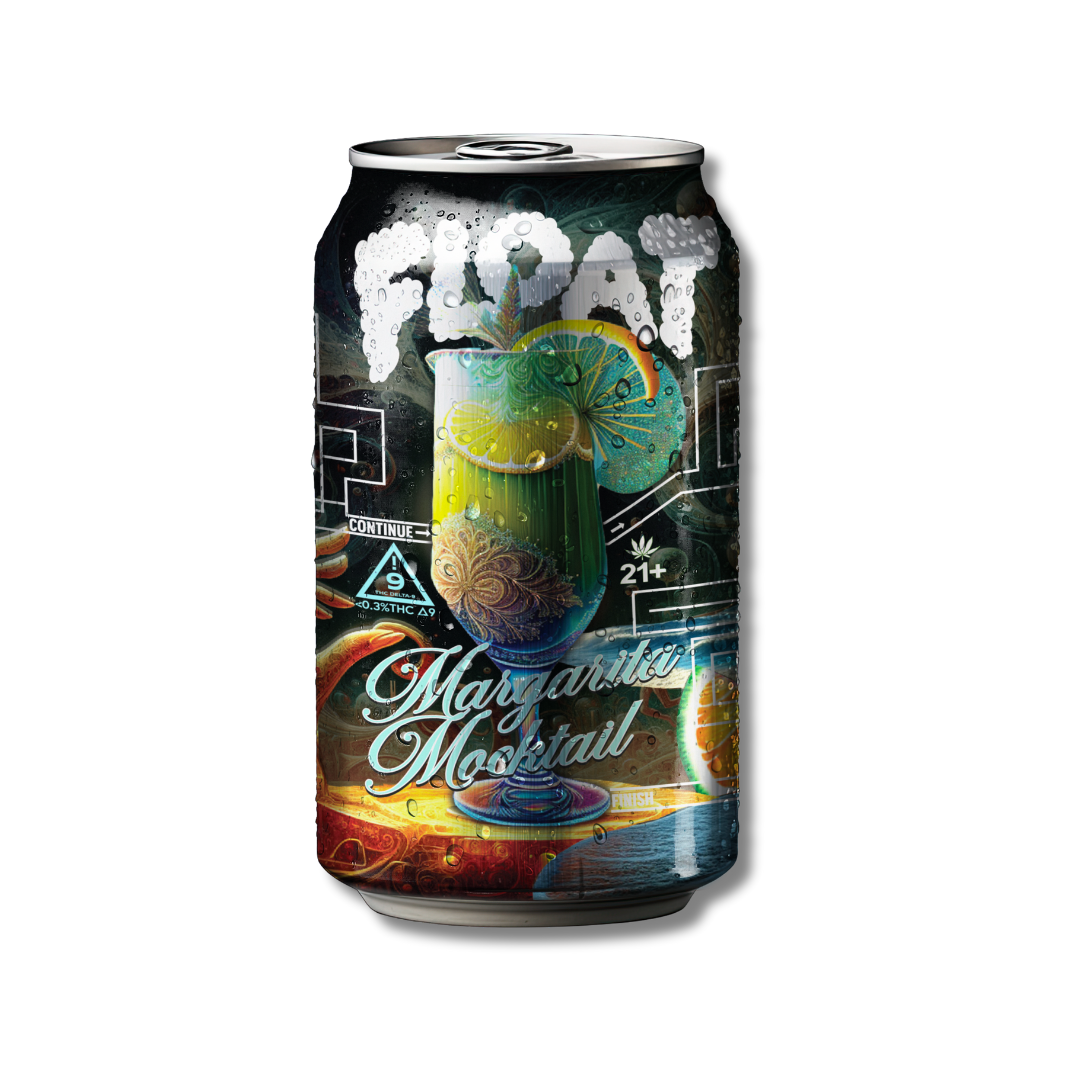
Featured in this article: FLOAT Mocktail Drinks™ → Shop now
Where the Number Came From
The 0.3% figure did not come from a safety study or a pharmacological finding. It traces back to a 1976 taxonomic paper by researchers Ernest Small and Arthur Cronquist, who proposed it as a practical dividing line for distinguishing fiber-type cannabis from drug-type cannabis.
It was a botanical convenience. Decades later it was written into agricultural policy, and it has defined an entire industry ever since.
What "0.3% by Dry Weight" Actually Means
This is the part that trips people up. The limit is a ratio, not a dose.
It measures the weight of Delta-9 THC as a percentage of the total dry weight of the product. It says nothing about how many total milligrams that product contains.
Consider the arithmetic:
- A 1-gram (1,000mg) sample at 0.3% contains 3mg of Delta-9 THC.
- A 5-gram (5,000mg) confection at 0.3% contains 15mg of Delta-9 THC.
Same compliant percentage. Five times the milligrams. This is precisely why hemp-derived edibles like our 25mg Delta-9 Lollipops and 25mg Delta-9 Mocktails can deliver a substantial dose while remaining within the federal definition — the product simply has enough total mass.
Delta-9 Only — Not Total Cannabinoids
The federal definition specifies Delta-9 THC. It does not cap THCa, CBD, CBG, CBN, or other cannabinoids.
This is the structural basis for the THCa flower category. Raw flower carries its cannabinoids overwhelmingly in the acidic THCa form. Since THCa is not Delta-9, a flower can carry high THCa content and still measure under 0.3% Delta-9.
The "Total THC" Complication
Not every jurisdiction measures it that way. Many apply a total THC formula that accounts for THCa's potential to convert:
Total THC = (THCa × 0.877) + Delta-9 THC
The 0.877 multiplier reflects the mass lost as carbon dioxide during decarboxylation. Under a total THC standard, most THCa flower would exceed the hemp threshold.
Which standard applies depends on where you are. Some states follow the Delta-9-only federal language; others have adopted total THC; others have restricted hemp-derived THC products separately. This is the single biggest source of confusion in the category, and it changes often.
When Testing Happens Matters Too
Compliance testing is typically performed on the finished product, but pre-harvest testing of the growing crop is also required in many programs. Cannabinoid content rises as a plant matures, so timing is a real agricultural constraint — a crop that tests compliant one week can exceed the limit the next.
What This Means for You as a Buyer
- Percentage is not potency. Read milligrams per serving, not the compliance percentage.
- Check your state. Federal legality does not guarantee legality where you live.
- Demand the COA. The compliance claim is only as good as the lab report behind it.
Hemp rules vary by state and are changing, including at the federal level in late 2026. Check the current rules where you live and the shipping restrictions on each product page.

Try it
25mg hemp-derived Delta-9 per can, alcohol-free, within the federal Delta-9 definition.
Shop nowThis article is educational and is not legal advice. Hemp regulations vary by state and change frequently — verify the rules in your jurisdiction. Float Kulture products are intended for adults 21 and over.
The Difference Between Hemp-Derived and Marijuana-Derived THC